Green courtyards
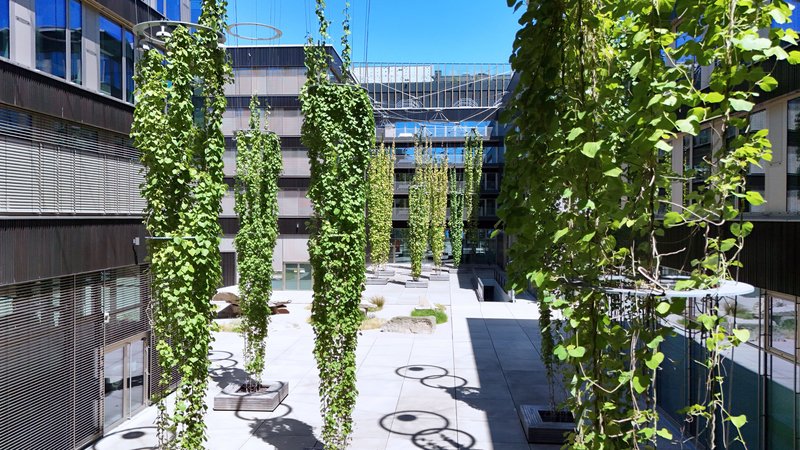
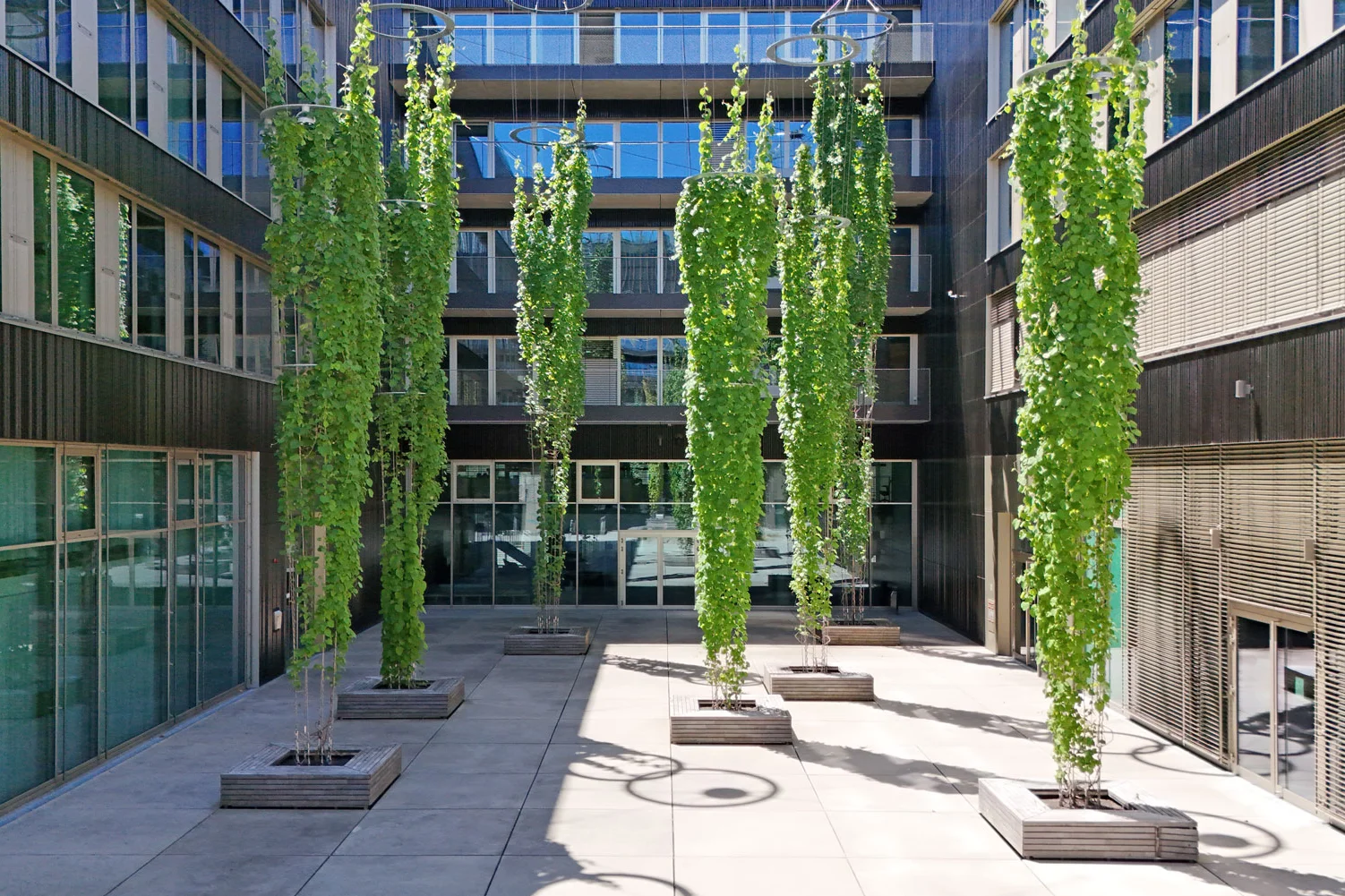
Greening courtyards with trellis structures is an effective way to enhance the quality of urban spaces. The need for green courtyards often arises in cities. Courtyards of office complexes and administrative buildings, as well as atriums in banks, hospitals, and other healthcare facilities, are locations where we have already had the opportunity to design and install numerous trellis structures for greening.


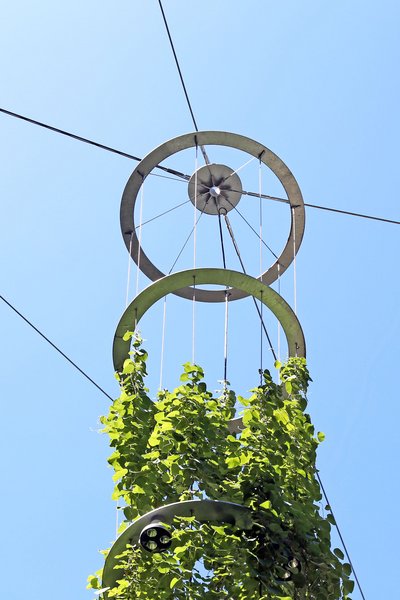
The use of trellis structures makes it possible to implement greening projects in a wide variety of shapes and dimensions. These include cylindrical structures up which climbing plants grow over several levels, truncated cones, irregular shapes, and vertical trellis ropes combined with rings or other geometric elements. Horizontally or vertically suspended ropes and nets are also possible.
The impact of green
In buildings and their courtyards, green structures enhance the environment visually, acoustically, and even olfactorily. Empty atriums and courtyards filled with greenery take on a lively, natural atmosphere. The change in acoustics is noticeable. The plants lower noise levels and reduce sound transmission. Depending on the choice of plants, subtle scents are also released by blooms and natural vegetation. All adjacent spaces offer charming views of the towering greenery. Spending time in the courtyards and atria becomes a special experience.
Planning and installation
The starting point is usually a design by architects and landscape architects. Based on this, the landscape architects select suitable plants and growth forms. Using these specifications, Jakob Rope Systems designs the ideal trellis structures for the greening. In doing so, we take into account the weight of the growing plants, the desired growth forms and directions, the forces acting on the attachment points on the building structure, as well as wind and snow loads. Based on all these parameters, we determine the appropriate dimensions for the suspension ropes and trellis structures.
The versions for growth
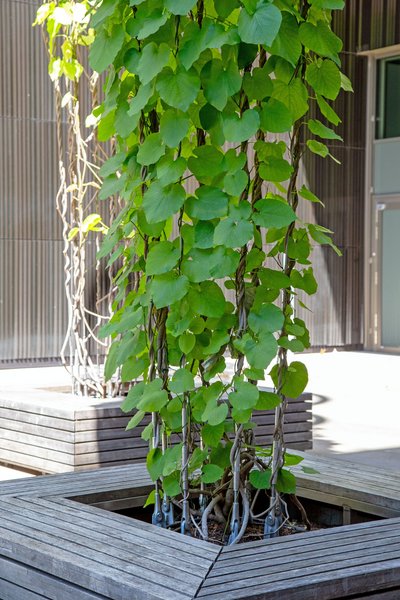
Greenery grows from plant pots or containers of various shapes. The containers are placed near the ground or distributed across different levels. This allows tall-growing plants to grow upward from below. Shorter plants are incorporated from higher levels. Planters placed near the ground are often combined with seating.
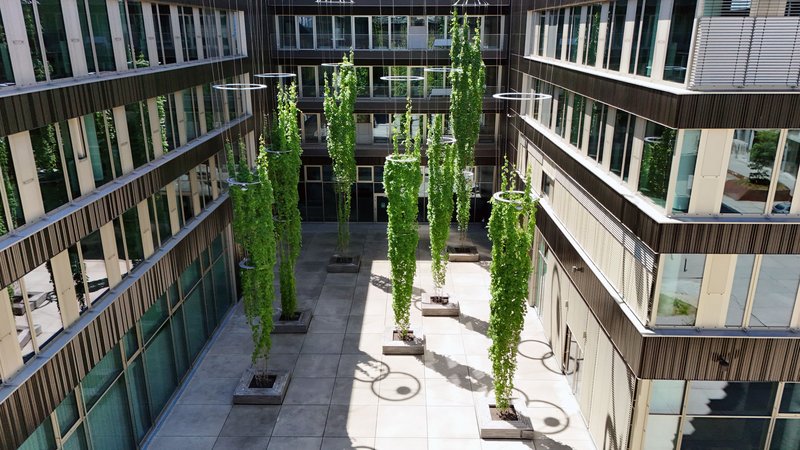
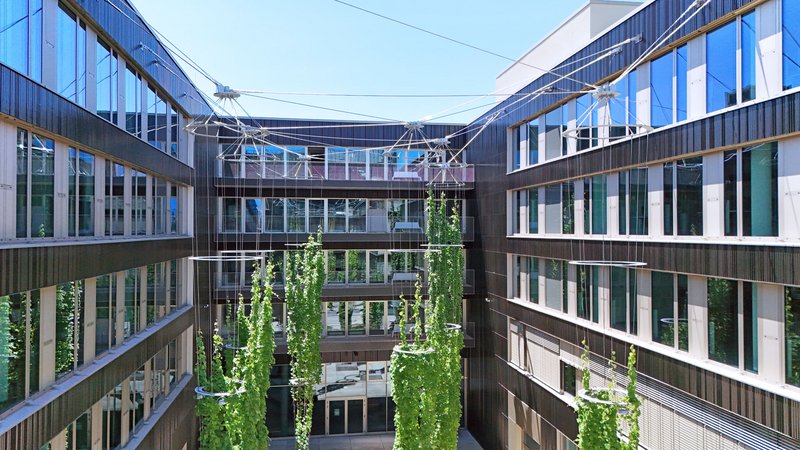
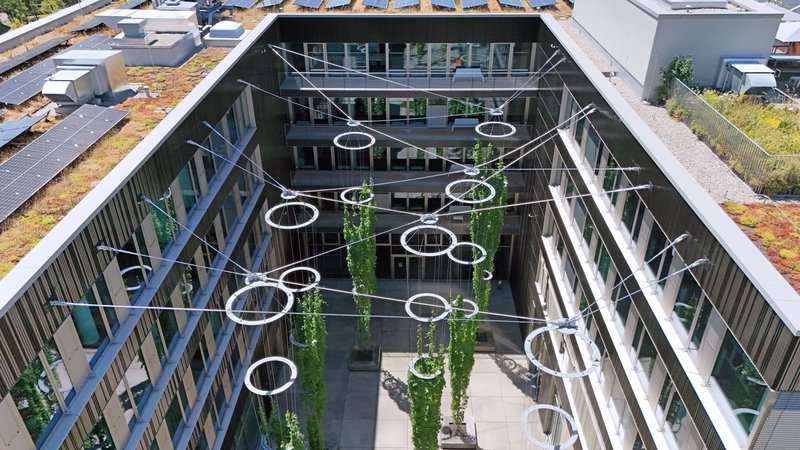
- Light: One of the most important factors determining the success of a green courtyard is this: Does the location provide enough light for the plants to grow? The amount of light also determines the shape and growth pattern of the trellis structure that guides the plants toward the light. Landscape architects typically assess the lighting conditions at the location and select appropriate plants and growth habits based on their findings.
- Mounting: For this purpose, suspension ropes are installed on the walls of the inner courtyard, usually at the level of the floor slabs of the adjacent spaces. In our projects, we determine during the planning phase where the suspension rope structures and the resulting tensile forces can best be accommodated. This is done in coordination with the building’s structural engineers.
- Fire protection: This is an important point that we clarify with the relevant fire safety authorities during every planning phase. Depending on the project, city, state, building structure, and building height, we must take different fire safety requirements into account in our projects.
- Irrigation: The best way to deliver water and nutrients to the plant containers is through an automated supply system. Landscape designers plan the appropriate system for this purpose. The integrated irrigation system uses sensors to optimally adapt to climatic conditions and the plants’ needs.
- Lifespan: When installed properly, the trellis structures will last 30 to 50 years without any problems. The plants are the only ones that require care, such as fertilization, pruning, and cleaning up fallen leaves. During periods of heavy growth, we check the tensile forces acting on the suspension ropes at regular intervals. Depending on the growth, we recommend doing this every three to five years.